

R.A.C.E. Explained: The 4 Steps of Fire Response

R.A.C.E. Explained
The 4 Steps of Fire Response
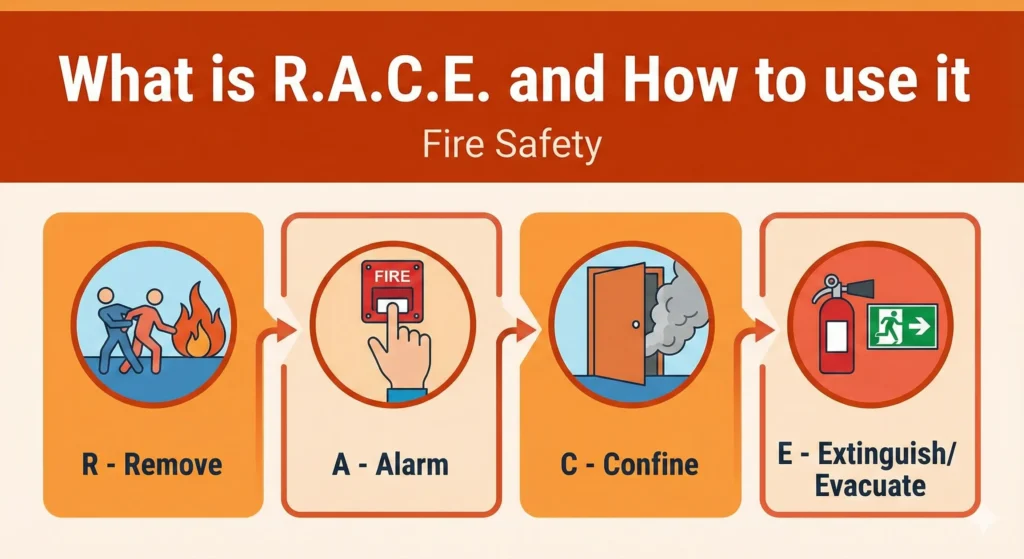
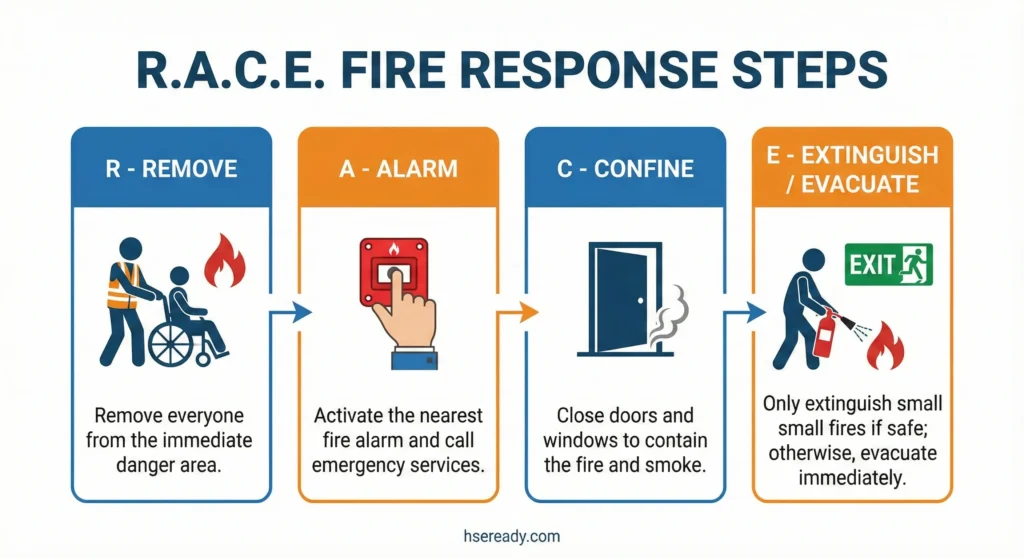
R.A.C.E. is a fire safety acronym that stands for Rescue, Alarm, Confine, and Extinguish (or Evacuate). It is a universal, step-by-step emergency response procedure used in healthcare and general industry to prioritize life safety over property protection. If you discover a fire, you must follow these steps in order: immediately rescue anyone in danger, sound the alarm, contain the smoke by closing doors, and then decide to extinguish or evacuate.
The R.A.C.E. Protocol at a Glance
If you hear a fire alarm or see smoke, do not panic. Follow this sequence immediately.
| Step | Action | Critical Rule |
|---|---|---|
| R – Rescue | Move people away from immediate danger. | Do not use elevators. |
| A – Alarm | Activate the pull station and call 911. | Never assume someone else has called. |
| C – Confine | Close all doors and windows behind you. | Do not lock doors; just latch them. |
| E – Extinguish | Use a fire extinguisher (P.A.S.S.) only if safe. | If the fire is larger than a trash can, Evacuate. |
(Scroll table left/right on mobile)
Step 1: Rescue (or Remove)
The first priority in any fire emergency is life safety. Before you worry about the fire itself, you must assist anyone in immediate danger.
- Action: Guide people to the nearest safe exit.
- Responsibility: Assist those with limited mobility or visitors who may not know the evacuation route.
Step 2: Alarm (or Alert)
Once immediate victims are safe, you must alert the rest of the facility. Seconds count.
- Action: Pull the nearest manual fire alarm pull station.
- Communication: Call 911 (or your facility’s emergency number) immediately after pulling the alarm. Provide the dispatcher with the exact location and size of the fire.
Step 3: Confine (or Contain)
Fire needs oxygen and fuel to grow. By confining the fire, you buy crucial time for evacuation and for the fire department to arrive.
- Action: Close every door and window as you leave an area.
- The Science: Closing a door can reduce the temperature in adjoining rooms and block toxic smoke. This is known as “compartmentalization.”
Step 4: Extinguish (or Evacuate)
This is the final decision point. You should only attempt to extinguish the fire if you have been trained and it is safe to do so. Otherwise, Evacuate.
- The fire is small (trash can size).
- You have a clear exit route behind you.
- You have the correct class of fire extinguisher.
How to Extinguish (The P.A.S.S. Method):
You have decided to fight the fire. You grab the red cylinder on the wall. Now what? Standing there fumbling with the trigger can cost you valuable seconds. Follow the PASS method.
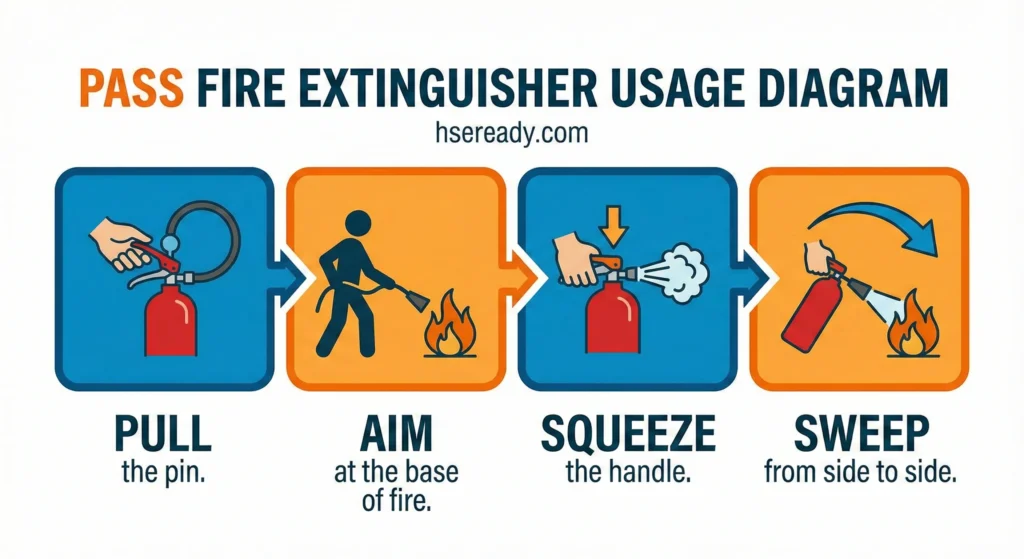
Pull
Pull the pin. This breaks the tamper seal. Aim away from your face.
Aim
Aim at the base of the fire. Aiming at the flames does nothing.
Squeeze
Squeeze the handle firmly. Do not use short bursts; keep a steady stream.
Sweep
Sweep from side to side covering the base until the fire is completely out.
Critical Pre-Check
Before engaging: Keep your back to the exit. Never let the fire get between you and the door. If the extinguisher fails, you need to be able to turn and run immediately.
Commonly Asked Questions
What does the R.A.C.E. stands for?
R.A.C.E. stands for Rescue, Alarm, Confine, and Extinguish. It is a mnemonic device used to remember the proper steps for acting during a fire emergency.
What is the difference between R.A.C.E. and P.A.S.S.?
R.A.C.E. is the overall strategy for managing a fire incident (Rescue, Alarm, Confine, Extinguish). P.A.S.S. is the specific technique used to operate a fire extinguisher (Pull, Aim, Squeeze, Sweep). You use P.A.S.S. during the “E” step of R.A.C.E.
Is the ‘E’ in RACE for Extinguish or Evacuate?
It can be both. If the fire is small and you are trained, ‘E’ stands for Extinguish. If the fire is large or you are untrained, ‘E’ stands for Evacuate immediately.
This content was researched referencing OSHA Standards 29 CFR 1910.38 (Emergency Action Plans), 1910.157 (Portable Fire Extinguishers), and NFPA 10 guidelines. It is intended for educational purposes and should be supplemented with site-specific training.
🔥 Fire Emergency Checklist
Copy and paste this into your safety training documents or email it to your team.
- [ ] RESCUE: Have I checked the immediate area for colleagues or visitors?
- [ ] ALARM: Has the manual pull station been activated?
- [ ] ALARM: Has 911 been called with specific location details?
- [ ] CONFINE: Are all doors and windows in the vicinity closed?
- [ ] DECIDE: Is the fire small enough to fight?
- YES: Use P.A.S.S. (Pull, Aim, Squeeze, Sweep).
- NO: Evacuate immediately to the Assembly Point.